


PAGE CONTENTS
IoT Connectivity: Requirements, Components, and Technologies

PAGE CONTENTS
What Is IoT Connectivity?
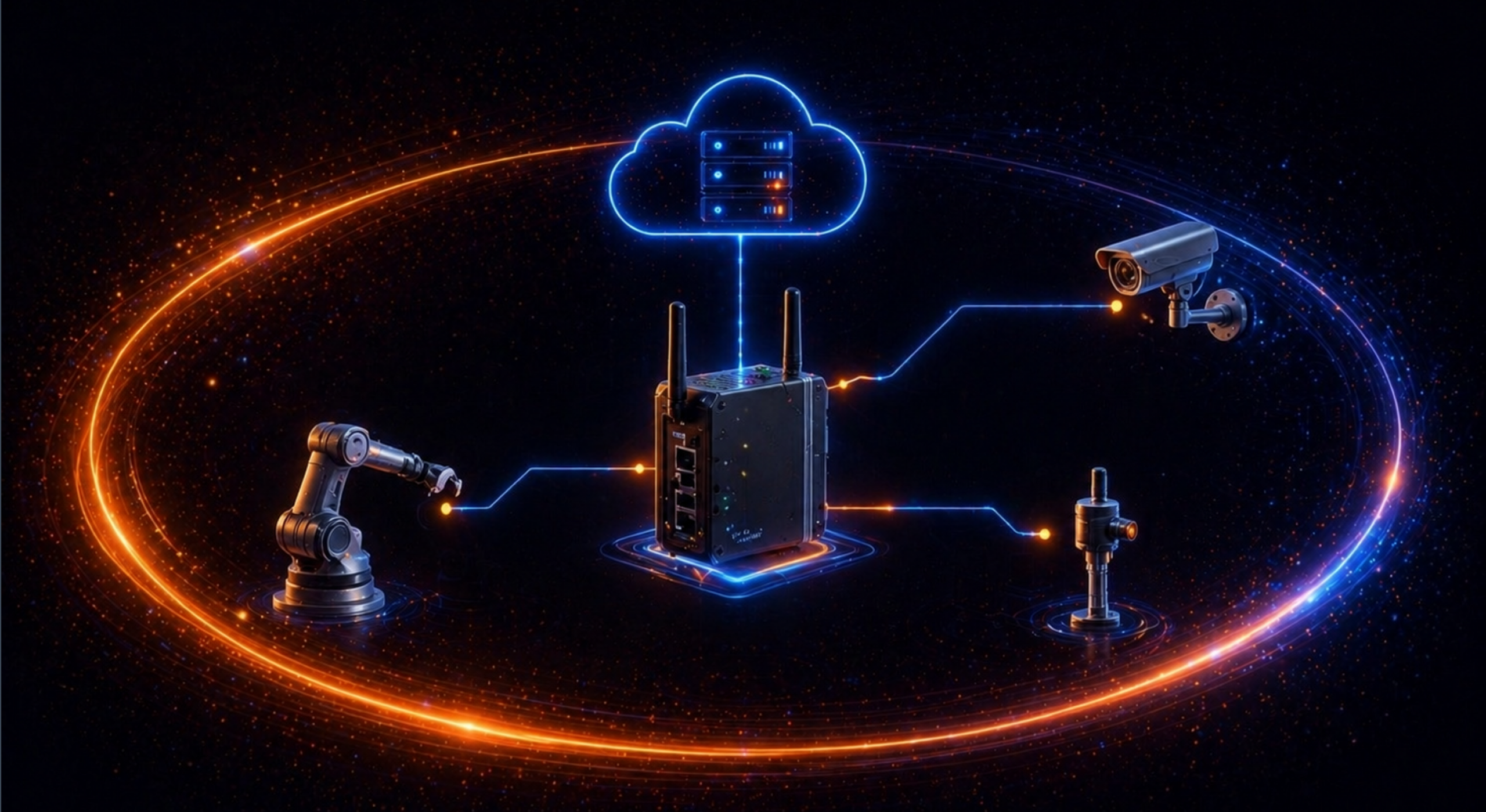
IoT connectivity refers to the technologies that enable devices to transmit data to the cloud / application server or other devices. It acts as the backbone for IoT, allowing sensors, machines, and smart devices to automate processes, facilitate real-time monitoring, and create actionable, data-driven insights.
Establishing reliable connectivity is essential for IoT because it transforms standalone devices into integrated systems capable of delivering valuable insights and automation. The type of connectivity chosen impacts device power consumption, data throughput, coverage area, and operational costs.
Key IoT connectivity technologies include:
- Cellular IoT: Highly reliable, suitable for mobile assets. Includes 4G/LTE, 5G for high-speed, and NB-IoT/LTE-M for low-power, wide-area needs.
- LPWAN (Low-Power Wide Area Network): Ideal for long-range, low-data, battery-operated sensors. Examples include LoRaWAN and Sigfox.
- Short-Range Wireless: Suitable for local, high-throughput, or power-constrained devices. Includes Wi-Fi, Bluetooth Low Energy (BLE), Zigbee, and NFC.
- Wired/Ethernet: Used for stationary, high-security, or high-bandwidth requirements.
This is part of a series of articles about IoT networking
Why Is IoT Connectivity Important?
IoT connectivity enables functionality, scalability, and measurable outcomes. The effectiveness of an IoT deployment depends on the suitability of its connectivity.
- Data transmission and access: Connectivity allows IoT devices to transmit data to application servers or cloud services for analysis and monitoring. Without connectivity, data remains on individual devices.
- Real-time monitoring and control: Applications such as industrial automation or smart traffic systems require low-latency, reliable connections to operate in real time.
- Scalability and system integration: The right connectivity solution supports integration of thousands or millions of devices within a single ecosystem.
- Energy efficiency and cost optimization: Connectivity options vary in power and bandwidth requirements. Selecting the appropriate protocol, such as LoRaWAN for low-power applications, reduces battery usage and operating costs.
- Security and reliability: Stable, secure connections protect data and maintain system integrity.
- Enabling automation and intelligence: Connectivity links devices to processing systems and machine learning models, supporting automation, predictive maintenance, and autonomous operation.
IoT connectivity enables connected devices, from simple sensors to distributed systems, to function as part of larger networks.
Key Requirements for IoT Connectivity
Coverage
Coverage defines the physical reach of a connectivity technology—how well it can maintain a signal across varying distances and terrains. In IoT, device deployments may span indoor environments, underground utility sites, moving vehicles, or rural landscapes. No single connectivity type works best in all contexts.
Cellular networks offer broad geographic coverage and are suited for mobile or widely distributed assets. LPWAN technologies like LoRaWAN and Sigfox provide long-range connectivity with minimal power consumption, making them ideal for remote sensors with infrequent transmissions. However, they often require private infrastructure or access to a compatible public network.
In contrast, short-range protocols like Wi-Fi and BLE are limited in range and work best for indoor or localized networks. Hybrid systems often combine multiple connectivity types to achieve seamless coverage across an entire deployment area. Evaluating signal propagation, interference, and gateway placement is key to designing a reliable IoT network.
Compliance
Regulatory and standards compliance ensures that connectivity solutions meet legal, safety, and technical requirements across different regions and industries. IoT devices often transmit data across public airwaves, use licensed spectrum, or interact with sensitive systems, making compliance non-negotiable.
For wireless technologies, compliance includes adherence to radio frequency regulations (e.g., FCC in the U.S., CE in Europe), which govern transmission power, frequency bands, and device certification. LPWAN technologies may have regional limitations on duty cycles and uplink/downlink capacity.
Industry-specific standards may also apply. In healthcare, devices must comply with HIPAA and IEC 60601 for medical data and device safety. Industrial environments may require certifications like ATEX for explosive atmospheres or IEC 62443 for cybersecurity. Choosing compliant connectivity technologies ensures global operability, safety, and trust.
Resiliency
Resilient connectivity maintains communication despite disruptions such as physical damage, signal interference, or power failures. For critical applications—like energy grids, transportation systems, or industrial automation—connectivity must be fault-tolerant and self-recovering.
Key resiliency mechanisms include:
- Redundancy: Multiple communication paths (e.g., cellular fallback to satellite) in case of primary network failure.
- Mesh networking: In protocols like Zigbee, data can reroute dynamically across nodes when a link breaks.
- Edge buffering: Devices temporarily store data locally if connectivity is lost, then sync once reconnected.
- Quality of Service (QoS): Ensures that essential traffic (e.g., alarms) is prioritized over non-critical data.
Resiliency also depends on infrastructure reliability, such as network uptime, gateway health, and power backup systems.
Security
Security in IoT connectivity protects the confidentiality, integrity, and availability of data as it moves across networks. Unlike traditional IT environments, IoT deployments often include resource-constrained devices in unsecured physical locations, making them more vulnerable to attacks.
Secure connectivity involves:
- Encryption: Transport Layer Security (TLS), DTLS, or application-layer encryption to prevent data interception.
- Authentication: Device-level certificates, SIM-based credentials (e.g., eSIMs in cellular IoT), or pre-shared keys to verify device identity.
- Network access control: Restricting device access through firewalls, VPNs, and network segmentation.
- OTA updates: Secure firmware and software updates to patch vulnerabilities without physical access.
- Monitoring and alerts: Anomaly detection and logging to identify suspicious behavior.
A secure connectivity layer ensures that compromised devices do not affect broader systems, and data is protected end-to-end.
Seamless Operation
Seamless operation refers to the ability of connected devices to maintain consistent communication as they move, change networks, or experience varying conditions. It ensures that devices operate without interruption or manual reconfiguration.
This is critical in use cases such as logistics (e.g., asset tracking), where a device must transition between Wi-Fi indoors and cellular networks outdoors. Handover mechanisms—like Mobile IP or multi-bearer support—allow for continuous operation without data loss.
Interoperability is another aspect of seamlessness. Devices and platforms using different communication protocols must integrate through gateways, middleware, or standardized APIs.
Protocol bridging (e.g., from Zigbee to MQTT over IP) allows devices with limited capabilities to be part of larger systems. The goal is for the user or system integrator to experience a unified network, regardless of the underlying complexity.
Performance
Performance requirements vary by application and are typically defined by three main factors:
- Latency: Time delay between data transmission and reception. Critical for real-time systems like robotics, industrial control, or remote surgery.
- Throughput: The amount of data transmitted per second. Needed for applications like video surveillance or real-time analytics.
- Jitter and reliability: Consistency in message delivery times, important for synchronized or time-sensitive operations.
Connectivity must match these performance needs. For example, LTE or 5G is preferable for high-throughput, low-latency applications, while LPWAN works for periodic sensor data with relaxed timing. Bandwidth constraints, interference, and network congestion can all degrade performance.
Network design must also consider backhaul capacity, edge processing capabilities, and application-layer optimizations to maintain overall system responsiveness.
Support
IoT devices often have long life cycles and are deployed in environments where onsite maintenance is costly or impractical. Ongoing support from connectivity providers, hardware vendors, and service platforms is crucial for sustained operation.
Support includes:
- Diagnostics and monitoring: Tools to assess signal quality, device status, and data flow in real time.
- Technical assistance: Access to knowledgeable support teams for troubleshooting or integration issues.
- SLAs and service guarantees: Defined metrics for uptime, response time, and repair, particularly for enterprise or critical applications.
- Lifecycle management: Managing SIM subscriptions, firmware updates, and decommissioning of devices over time.
Platform integration: APIs and SDKs that simplify connectivity management and data ingestion.
Core Components of IoT Connectivity
Devices, Sensors, and Actuators
At the edge of any IoT system are devices that collect or act on data. Sensors gather environmental inputs such as temperature, pressure, motion, or light. Actuators perform physical actions like opening a valve, adjusting a motor, or switching a circuit. These components convert physical phenomena into digital signals, or vice versa, enabling the interaction between the physical and digital worlds.
Connectivity requirements for edge devices depend on the use case. Some sensors transmit tiny amounts of data infrequently and prioritize battery life, while others stream data continuously and need high throughput. Devices may support integrated radios (e.g., BLE, LoRa, or LTE-M) or connect via wired interfaces to local gateways. Power efficiency, transmission range, and protocol support are critical factors in selecting the right connectivity for edge devices.
Gateways and Hubs
Gateways serve as bridges between local IoT devices and external networks or cloud platforms. They aggregate data from sensors using short-range protocols (e.g., Zigbee, Modbus, BLE), perform local processing or filtering, and forward relevant data over long-range connectivity like cellular, Ethernet, or LPWAN. Gateways also handle protocol translation and security enforcement, enabling communication between heterogeneous devices and systems.
In some deployments, especially in industrial or building automation, hubs provide centralized coordination and control. These may support local data storage, real-time decision-making, or integration with edge AI models. A reliable gateway infrastructure enhances system resiliency and reduces upstream bandwidth requirements by handling preprocessing and intelligent filtering at the edge.
Network Infrastructure
Network infrastructure refers to the physical and virtual components that carry IoT data from devices to processing systems. This includes base stations, access points, repeaters, backhaul links, and network cores. In private networks, it may also involve edge computing nodes, local servers, and internal routing mechanisms.
The choice of network infrastructure affects scalability, latency, and availability. For example, cellular IoT relies on operator-maintained towers and core networks, while LoRaWAN may require private gateways connected to cloud-based network servers. Hybrid approaches often blend on-premise infrastructure with cloud connectivity to optimize performance, security, and control.
Protocols and Software Stacks
IoT communication protocols define how data is formatted, transmitted, and interpreted between devices and systems. They operate across multiple layers: Physical, data link, network, and application. Common examples include MQTT, CoAP, HTTP, and AMQP at the application layer, and IP, UDP, or TCP at the transport layer. Each has tradeoffs in terms of overhead, reliability, and complexity.
Software stacks for IoT connectivity integrate protocol support, device drivers, security libraries, and network management features. Lightweight stacks like Zephyr RTOS or FreeRTOS are optimized for constrained devices. Middleware and SDKs from connectivity providers simplify development and enable features like secure onboarding, over-the-air updates, and diagnostics. Standardized stacks improve interoperability and reduce integration time.
IoT Connectivity Technologies
Cellular IoT
Cellular IoT leverages mobile networks (e.g., 2G, 4G/LTE, 5G) to provide wide-area connectivity for devices. It offers managed infrastructure, global reach, and high reliability, making it ideal for mobile assets, remote monitoring, and real-time applications. LTE-M and NB-IoT are optimized for IoT with reduced power consumption and better indoor coverage, while 5G enables ultra-low latency and massive device density.
Cellular connectivity is often provisioned through SIM or eSIM technology, enabling secure authentication and over-the-air profile management. Enterprises benefit from carrier partnerships, MVNO services, and private cellular networks for better control and integration. However, costs and coverage limitations in certain regions may require fallback options or hybrid connectivity models.
LPWAN (Low-Power Wide Area Network)
LPWAN technologies such as LoRaWAN, Sigfox, and NB-IoT are designed for low-bandwidth, long-range communications with minimal energy use. These are well-suited for battery-powered sensors in remote or hard-to-reach areas, like utility metering, environmental monitoring, or agriculture. Devices can operate for years without maintenance due to infrequent transmissions and deep sleep modes.
LoRaWAN supports private deployments using unlicensed spectrum, offering flexibility and low operational costs. NB-IoT, while also classified as LPWAN, uses licensed cellular spectrum and benefits from mobile operator support. Trade-offs include limited data rates and higher latency, which restrict use to non-real-time applications.
Short-Range Wireless
Short-range wireless technologies include Wi-Fi, Bluetooth Low Energy (BLE), Zigbee, Z-Wave, and NFC. These are ideal for local-area connectivity in smart homes, buildings, and wearables. Wi-Fi offers high throughput and seamless integration with IP networks but consumes more power. BLE is optimized for low-energy devices transmitting small payloads intermittently.
Zigbee and Z-Wave support mesh networking, allowing devices to relay messages across a network, enhancing coverage and fault tolerance. These protocols are often used in lighting, HVAC, and security systems. Short-range technologies require careful planning for interference, coexistence, and gateway placement, especially in dense environments.
Wired/Ethernet
Wired connectivity, such as Ethernet, is used in scenarios where high reliability, bandwidth, and security are required. It eliminates concerns about wireless interference, offers consistent latency, and is immune to many physical-layer attacks. Industrial automation, energy grids, and building management systems often rely on wired connections for core systems.
Ethernet also simplifies power delivery via Power over Ethernet (PoE), reducing cabling for devices like cameras or access points. Limitations include higher installation costs and reduced flexibility for mobile or hard-to-reach assets. However, in fixed installations with strict uptime requirements, wired solutions offer unmatched stability and performance.
Related content: Read our guide to IoT connectivity platforms
Key IoT Connectivity Use Cases
IoT connectivity supports a wide range of deployments that differ in scale, geography, performance, and regulatory requirements. From public infrastructure to industrial automation and global enterprise fleets, each use case imposes distinct demands on coverage, resiliency, management, and security.
- Smart cities and utilities: Connects sensors, meters, and grid devices to manage traffic, air quality, energy distribution, and waste systems. Requires wide-area coverage, scalability, and secure data transmission using LPWAN, cellular, and mesh networks.
- Global device connectivity for enterprises: Supports multinational IoT deployments with roaming, regulatory compliance, and centralized device management. Relies on cellular IoT, eSIM, and multi-IMSI to maintain compatibility and control across regions.
- Private 5G and hybrid networks: Uses dedicated 5G infrastructure for low-latency, high-throughput industrial environments. Hybrid models combine private on-site networks with public cellular for off-site connectivity.
- Industrial IoT and manufacturing: Enables automation, predictive maintenance, asset tracking, and worker safety. Combines Ethernet, Wi-Fi, LPWAN, and private 5G, often with edge processing for local decision-making.
MVNO and connectivity services: Provides managed IoT connectivity through aggregated access to multiple carrier networks. Includes remote SIM provisioning, usage monitoring, and centralized connectivity management platforms.
Challenges of IoT Connectivity
Security, Privacy, and Data Protection Concerns
IoT devices often operate in distributed environments, increasing exposure to tampering and unauthorized access. Weak authentication, unencrypted communication, and outdated firmware create risks. Securing IoT connectivity requires encrypted transmission, device identity management, secure boot, and regular updates. Regulations such as GDPR and HIPAA impose additional compliance requirements. Data minimization and proper key management are also critical to reduce exposure in the event of a breach.
Infrastructure Complexity and Cost
IoT connectivity infrastructure can be complex and costly, particularly across multiple locations. Challenges include coverage planning, spectrum licensing for private networks, and backhaul integration. Costs include hardware such as gateways and antennas, as well as subscriptions and management services. Long-term operational expenses, including maintenance and scaling, must be factored into total cost of ownership.
Scalability and Management of Large Device Fleets
Large device fleets require provisioning, updates, monitoring, and retirement processes. Failures at scale can cause outages or data loss. Device management platforms support provisioning, firmware updates, diagnostics, and policy enforcement. Automation and centralized visibility are essential to prevent configuration drift and operational bottlenecks.
Standard Fragmentation and Interoperability Barriers
The IoT ecosystem includes many protocols, hardware platforms, and data formats. This creates interoperability challenges when integrating devices from different vendors. Initiatives such as oneM2M, LwM2M, and open-source middleware aim to improve interoperability, though adoption varies. Careful selection of standards-based technologies reduces integration complexity and vendor lock-in.
Best Practices for Robust, Scalable IoT Connectivity Solutions
Here are some of the ways that organizations can improve their IoT connectivity.
Design for Intermittent Coverage and Retry/Backoff
IoT devices may experience intermittent connectivity. Systems should buffer data locally and implement retry mechanisms with exponential backoff to prevent network congestion. Graceful degradation ensures devices continue operating safely even when offline.
Applications can adjust behavior based on signal strength or network status. For example, devices can reduce reporting frequency during poor connectivity. Adaptive logic improves reliability while minimizing unnecessary network usage.
Use eSIM With Multi-IMSI/Multi-Profile for Resilience
eSIM technology with multiple IMSIs or profiles allows devices to switch between operators. This maintains connectivity if one network becomes unavailable. It also simplifies global deployments by reducing the need for region-specific SIM logistics.
Over-the-air provisioning enables profile updates without physical access. This reduces maintenance costs for remote or hard-to-reach devices. It also allows enterprises to negotiate better carrier terms over time.
Optimize Payloads and Reporting Frequency to Save Power and Cost
Compact data formats such as CBOR or Protocol Buffers reduce bandwidth usage. Devices should transmit only relevant or changed data. Delta reporting and edge filtering further reduce unnecessary transmissions.
Reporting frequency should align with application requirements. High-frequency reporting increases power consumption and data costs. Event-driven communication often balances responsiveness with efficiency.
Provide Firmware/FOTA Fallbacks and Rollback Safety
Firmware-over-the-air (FOTA) updates should include fallback mechanisms, such as dual partitions, to restore a working version if an update fails. Fail-safe bootloaders prevent devices from becoming inoperable after faulty updates.
Updates should include integrity checks and staged rollouts. Cryptographic signing ensures firmware authenticity. Gradual deployment reduces risk across large device fleets.
Negotiate SLAs and Maintain Multi-MNO Options
Service-level agreements (SLAs) should define availability, latency, throughput, and support expectations. Clear escalation paths and penalties improve accountability.
Supporting multiple mobile network operators (MNOs) through eSIM or roaming agreements reduces reliance on a single provider. This improves coverage consistency across regions.
It also strengthens resilience against regional outages or carrier disruptions.
Implement Least‑Privilege Networking and Microsegmentation
Limiting network access to only what each device needs reduces the attack surface and minimizes the impact of potential breaches. Least-privilege networking enforces strict access controls, allowing devices to connect only to approved endpoints and services.
Microsegmentation adds further protection by isolating device groups or individual devices within the network. This prevents lateral movement by attackers and simplifies threat detection. Combined with secure onboarding and regular auditing, these practices strengthen the overall security posture of IoT deployments.
IoT Connectivity with floLIVE®
floLIVE® builds and operates the first and largest global localized IoT network — a cellular IoT connectivity platform purpose-built for enterprise, MVNO, and MNO deployments across more than 190 countries. Unlike traditional roaming-based IoT connectivity, floLIVE deploys distributed Core Network nodes and Local Breakout in-country, giving connected devices local performance, data residency compliance, and carrier-grade reliability wherever they operate.
For enterprises managing large, distributed IoT fleets, floLIVE’s Connectivity Management Platform (CMP) provides centralized visibility, provisioning, and lifecycle management across all devices and regions from a single interface. floLIVE’s Multi-IMSI SIM technology allows devices to seamlessly switch between operators and NTN, ensuring continuity even when individual networks are unavailable — without physical SIM changes or manual reconfiguration.
Whether you’re deploying thousands of industrial sensors, managing a global fleet of connected assets, or building an MVNO IoT offering, floLIVE provides the connectivity infrastructure to scale with confidence.