


PAGE CONTENTS
AIoT Solutions: Components, Use Cases, and 6 Solutions to Know


PAGE CONTENTS
TL;DR: AIoT solutions pair AI with connected IoT devices to analyze data and act in real time. Best for: global connectivity, floLIVE; cloud scale, AWS IoT and Microsoft Azure IoT; industrial analytics, Siemens Insights Hub.
What are Artificial Intelligence of Things (AIoT) Solutions?
AIoT Solutions combine artificial intelligence (AI) with Internet of Things (IoT) infrastructure to enable connected devices to learn, predict, and act autonomously in real-time. The synergy between AI and IoT allows organizations to extract actionable insights from massive volumes of real-time data, leading to improved efficiency, predictive maintenance, enhanced user experiences, and new business models.
Key components and functionalities of AIoT include:
- Edge inference devices: Sensors and cameras that analyze data locally or in close proximity for immediate, real-time responses rather than just collecting data.
- Predictive maintenance: Analyzing machine data to anticipate failures before they occur, reducing downtime.
- Data-driven decision making: Using AI algorithms to optimize processes based on environmental, operational, and performance data.
- Automated action: Machines that automatically adjust, such as in automated industrial control or climate management.
Industry applications:
- Manufacturing/IIoT: Optimizing production lines, reducing downtime, and increasing safety using AI-enabled sensors.
- Physical security: Using AI-driven video monitoring for remote, high-risk site surveillance.
- Logistics: Real-time tracking and supply chain optimization.
- Healthcare & agriculture: Cold chain monitoring and temperature-sensitive product tracking.
This is part of a series of articles about IoT applications
AIoT Solutions at a Glance
The table below summarizes the key differences between the AIoT solutions covered in this article. We explore each of them in more detail in the sections that follow.
| Category | Solution | Best For | Key Strengths | Things to Consider |
| Connectivity & Infrastructure | Flolive | Compliant global cellular IoT connectivity | Localized core network, multi-IMSI, all SIM types | Pricing takes time to learn |
| Connectivity & Infrastructure | AWS IoT | Large-scale IoT apps on AWS | Broad connectivity, edge, and device management | Steep learning curve |
| Connectivity & Infrastructure | Cisco IoT Control Center | Cellular connectivity for SIM fleets | Automated provisioning, billing, diagnostics | Limited custom fields, no online charging |
| Analytics & Application | Microsoft Azure IoT | Devices across cloud and edge | Deep Azure ecosystem integration | Cost and documentation complexity |
| Analytics & Application | Siemens Insights Hub | Industrial IoT analytics and OEE | Prebuilt OEE, asset health, energy apps | Learning curve, complex pricing |
| Analytics & Application | ThingsBoard | Open-source device management | Self-hosted, customizable dashboards and rules | Self-hosting overhead |
How AIoT Solutions Work
Data Collection via IoT Devices
At the foundation of every AIoT solution is data collection, which relies on a range of IoT devices such as sensors, actuators, cameras, and embedded systems. These devices are placed to monitor physical parameters, temperature, humidity, motion, location, energy consumption, and more, across environments like factories, hospitals, retail spaces, or homes. The effectiveness of an AIoT system is tied to the quality, frequency, and granularity of the data gathered by these edge devices.
The continuous and automated nature of IoT data collection provides a high-resolution stream of information for analysis. This real-time data stream serves as the input for AI models to extract patterns, detect anomalies, and predict outcomes. Without the sensory layer provided by IoT devices, AI would lack the operational context and environmental feedback needed to support automation and decision-making.
Data Processing (Edge vs. Cloud AI)
After data is collected, processing can occur at the edge, on or near the device, or in the cloud. Edge processing involves running AI models directly on local devices or gateways, enabling rapid analysis and response with minimal latency. This approach suits scenarios where real-time decision-making is critical, such as autonomous vehicles, industrial automation, or healthcare monitoring, and where bandwidth or privacy concerns limit sending raw data to the cloud.
Cloud AI provides centralized computing power for complex analytics, deep learning, and large-scale model training. Data transmitted to the cloud can be aggregated from thousands or millions of devices, allowing broader pattern recognition, historical analysis, and cross-device insights. Many AIoT solutions use a hybrid approach, processing critical data at the edge for immediate actions while using the cloud for resource-intensive analytics and long-term optimization.
Real-Time Decision-Making
A core feature of AIoT solutions is their ability to make decisions in real time based on insights derived from data analysis. AI models embedded in the system interpret incoming data streams to identify events, predict outcomes, or trigger automated responses without human intervention. This allows organizations to respond quickly to equipment failures, environmental changes, or security threats, reducing downtime and improving safety.
Real-time decision-making is important for applications where delays have significant consequences, such as industrial automation, healthcare emergencies, or smart grid management. The combination of IoT sensing and AI-driven analytics ensures that responses are timely and contextually relevant, adapting to new data as it arrives. This responsiveness improves operational efficiency and supports proactive and preventative actions.
Feedback Loops and Continuous Learning
AIoT solutions use feedback loops to refine performance over time. As devices collect new data and AI models make predictions or decisions, the outcomes of those actions are monitored and fed back into the system. This enables continuous learning, where AI algorithms adjust and improve based on real-world results, environmental changes, or evolving user behavior.
Continuous learning allows AIoT systems to remain accurate in dynamic environments. For example, predictive maintenance models in manufacturing update failure thresholds as machinery ages, while smart home assistants personalize responses as they learn user preferences. Feedback loops ensure that AIoT solutions evolve and adapt to new challenges without extensive manual intervention.
Key Components and Functionalities of AIoT Solutions
Sensors and Smart Devices
Sensors and smart devices form the interface between the digital and physical worlds in AIoT systems. These devices capture data, from environmental metrics like temperature and air quality to visual information from cameras and biometric readings from wearables. The quality, placement, and calibration of these sensors affect the reliability of insights generated by the AI layer.
Smart devices also include actuators and controllers that execute automated actions based on AI-driven decisions, such as adjusting lighting, controlling machinery, or sending alerts. The integration of sensing and actuation enables AIoT solutions to monitor and influence their environments. As sensor technology advances, AIoT systems benefit from richer data and finer granularity.
Connectivity (5G, Wi-Fi, LPWAN)
Reliable connectivity enables data flow between devices, edge gateways, and cloud platforms. Technologies like 5G deliver low latency and high bandwidth, supporting real-time applications and high device density in environments such as smart factories or urban infrastructure. Wi-Fi is widely used for indoor and local-area deployments, providing connectivity for homes, offices, and commercial spaces.
Low-power wide-area networks (LPWAN), such as LoRaWAN and NB-IoT, support long-range, low-bandwidth scenarios where devices operate on limited power budgets, such as environmental monitoring or asset tracking. The choice of connectivity affects speed, reliability, power consumption, cost, and scalability. AIoT solutions often incorporate multiple connectivity options to support different use cases and maintain continuous data transmission.
Edge Computing
Edge computing in AIoT involves processing data and running AI models close to the source of data generation, typically on gateways or embedded devices. This approach reduces latency, conserves bandwidth, and supports real-time analytics for applications like autonomous vehicles, industrial robotics, or safety monitoring. By filtering and analyzing data locally, edge computing enables immediate responses while reducing the amount of data sent to the cloud.
Edge computing can improve privacy and security by keeping sensitive data on-premises and reducing exposure to external threats. As hardware capabilities improve, more sophisticated AI models can run on edge devices, expanding the range of tasks performed without cloud dependency. This distributed intelligence makes AIoT systems more resilient and responsive, even in environments with intermittent connectivity or strict compliance requirements.
Cloud Platforms
Cloud platforms provide infrastructure to aggregate, store, and analyze the data generated by AIoT devices. They offer centralized resources for analytics, machine learning, and orchestration of device fleets. Cloud platforms enable organizations to manage and monitor devices, deploy AI models, and integrate with enterprise systems from a single interface.
In addition to computing power, cloud platforms offer tools for data visualization, alerting, and reporting, helping stakeholders extract insights from raw data. Cloud-based AIoT solutions support scalability, allowing them to accommodate growth in device count or data volume. By offloading complex analytics and long-term storage to the cloud, organizations can focus on deploying intelligence at the edge.
AI/ML Models
AI and machine learning (ML) models are the core of AIoT solutions, transforming raw sensor data into predictions, classifications, or automated decisions. These models can detect anomalies, forecast equipment failures, optimize energy usage, or personalize user experiences. The effectiveness of AIoT depends on selecting appropriate models, training them on relevant data, and updating them to reflect changing conditions.
AI/ML models in AIoT are often deployed at both the edge and the cloud, balancing real-time inference with large-scale learning. Edge-deployed models handle immediate decisions, while cloud-based models perform deeper analytics and periodic retraining. Effective AIoT solutions include mechanisms for model deployment, monitoring, and retraining to maintain accuracy and adaptability.
APIs and Integration Layers
APIs and integration layers connect AIoT systems with other software, devices, and business applications, enabling interoperability and data sharing across organizational silos. These interfaces support device management, data ingestion, analytics, and workflow automation, enabling modular AIoT solutions that adapt to changing requirements.
Integration layers allow AIoT solutions to interact with ERP, CRM, and other enterprise platforms, embedding IoT and AI insights into business processes. Well-designed APIs support secure, scalable integration with third-party services, partner ecosystems, and custom applications. This interoperability supports end-to-end value and alignment with complex IT environments.
Key Use Cases of AIoT Solutions
Industrial and Manufacturing (IIoT)
AIoT plays a central role in industrial IoT (IIoT) by enabling predictive maintenance, process optimization, and quality control. Sensors on machinery collect vibration, temperature, and performance data, which AI models analyze to predict failures before they occur. This reduces unplanned downtime and extends equipment life.
AIoT improves production efficiency by identifying bottlenecks and adjusting workflows. Computer vision systems inspect products in real time, detecting defects. These capabilities support proactive operations, lowering costs and improving output consistency.
Healthcare
In healthcare, AIoT solutions support continuous patient monitoring, early diagnosis, and operational efficiency. Wearable devices and medical sensors collect real-time health data such as heart rate, oxygen levels, and activity patterns. AI models analyze this data to detect anomalies and alert clinicians to potential issues.
Hospitals use AIoT for asset tracking, workflow optimization, and diagnostics. Connected imaging systems combined with AI assist in identifying diseases faster and with greater accuracy. AIoT supports personalized and preventative care while reducing the burden on healthcare staff.
Retail
Retailers use AIoT to enhance customer experience, optimize inventory, and improve store operations. Smart shelves, cameras, and sensors track product availability and customer behavior in real time. AI analyzes this data to forecast demand, automate restocking, and personalize promotions.
Computer vision and edge AI enable cashier-less checkout and in-store analytics. Retailers gain insights into foot traffic patterns, dwell time, and conversion rates. This data-driven approach supports store layout optimization, shrinkage reduction, and improved shopping experiences.
Smart Cities
AIoT supports smart city infrastructure by enabling management of resources and services. Connected sensors monitor traffic flow, air quality, energy usage, and public safety conditions. AI systems analyze this data to optimize traffic signals, reduce congestion, and improve emergency response.
Cities use AIoT for smart lighting, waste management, and water distribution. For example, adaptive street lighting adjusts based on activity levels, reducing energy consumption. These systems support operational efficiency, cost reduction, and improved quality of life.
Smart Homes
In smart homes, AIoT enables automation, energy efficiency, and personalized living environments. Devices such as thermostats, security cameras, lighting systems, and voice assistants collect data on user behavior and environmental conditions. AI uses this data to automate routines and adjust settings.
Smart home systems adjust temperature based on occupancy, detect security threats, and manage energy consumption. Over time, they learn user preferences and adapt accordingly. This creates a convenient and efficient living space while reducing energy waste.
Notable AIoT Solutions
AIoT Connectivity and Infrastructure Platforms
1. FLOLIVE®

Best for: Compliant global cellular IoT connectivity across many countries
Strengths: One platform spanning multi-network coverage and all SIM types
Things to consider: Pricing model can take time to understand at first
Flolive runs a cloud-managed cellular network built specifically for IoT. Instead of relying on roaming, it operates its own globally distributed core network with local points of presence, so traffic can break out locally in the country where a device runs. The network applies local profiles across continents and combines more than 15 carrier partners and 750 networks under a single connectivity architecture.
It supports cellular technologies from 2G through 5G, along with low-power wide-area and non-terrestrial satellite networks on the same platform. A unified Connectivity Management Platform gives a single view of every device, where teams provision SIMs, monitor data usage, enforce security policies, and switch network profiles. Because connectivity is localized, data can stay in the country where it originates, which supports rules such as GDPR and CCPA.
Key features include:
- Localized global core network: Flolive operates its own distributed core network with local breakout, applying in-country profiles so devices connect through local networks rather than routing back through a central roaming hub.
- Multi-IMSI, multi-network coverage: A large IMSI library delivered over eUICC and multi-IMSI SIMs lets a device authenticate across several mobile networks in each country, providing coverage and redundancy from one connectivity setup.
- Support for every SIM form factor: The platform works with plastic SIMs, embedded MFF2 eSIMs, iSIM architectures, and softSIM, handling activation, remote provisioning, and lifecycle management across devices and regions.
- Connectivity Management Platform: A single dashboard provides device visibility, data usage monitoring, security policy enforcement, billing, diagnostics, and the ability to switch network profiles across the global fleet.
- Converged cellular and satellite connectivity: The network unifies cellular technologies from 2G to 5G with low-power wide-area and IoT non-terrestrial satellite networks, where satellite can act as a backup path under the same service.
- Data sovereignty and roaming compliance: Local IMSIs are applied when devices enter regulated countries, keeping user-plane traffic in-country to meet data privacy laws and address permanent roaming restrictions.
Limitations (as reported by users on G2):
- Initial pricing clarity: Some users note the pricing structure can be difficult to follow at the outset and benefits from working through the details with the team.
- Portal feature development: A few users mention that certain management portal capabilities are still being expanded as the platform develops.
2. AWS IoT
Best for: Building large-scale IoT applications on AWS cloud services
Strengths: Broad set of connectivity, edge, and device management services
Things to consider: Steep learning curve when integrating multiple services
AWS IoT is a collection of cloud services that connect devices to AWS and manage them at scale. Devices communicate with AWS IoT Core through a managed message broker using MQTT, MQTT over WebSockets, HTTPS, and LoRaWAN, publishing data and receiving commands without the need to run servers. A rules engine routes messages to other AWS services, and a Device Shadow stores each device’s last reported and desired state.
Beyond connectivity, AWS IoT spans edge runtimes, device management, security tooling, and industry-specific services. AWS IoT Greengrass extends local processing, messaging, and machine learning inference to edge devices, while services such as AWS IoT SiteWise, TwinMaker, and FleetWise address industrial, digital twin, and connected vehicle use cases.
Key features include:
- Managed device connectivity: AWS IoT Core connects devices through a managed message broker using MQTT, MQTT over WebSockets, and HTTPS, supporting publish and subscribe messaging between devices and cloud services at large scale.
- Rules engine and AWS integration: The rules engine evaluates inbound messages and filters, transforms, and routes them to services such as AWS Lambda, Amazon S3, and DynamoDB for processing and storage based on defined rules.
- Device Shadow and state management: A persistent virtual representation of each device’s state lets applications read the last reported state and set a desired state even when the device is disconnected.
- Edge processing with Greengrass: AWS IoT Greengrass is an edge runtime that runs local processing, messaging, data management, and machine learning inference, with prebuilt components and secure connections to AWS and third-party services.
- Device management and security: AWS IoT Device Management registers, organizes, monitors, and updates device fleets over the air, while Device Defender audits fleets and flags abnormal behavior. Certificates and policies control device access.
- Industrial and vehicle services: SiteWise collects and monitors industrial equipment data, TwinMaker builds digital twins of physical systems, and FleetWise collects and transfers vehicle data to the cloud.
Limitations (as reported by users on G2):
- Steep learning curve: Users report that connecting AWS IoT Core with other AWS services involves a significant learning curve and can be complex to set up.
- Limited graphical customization: Some users find customization limited, particularly when integrating and managing device keys and certificates through the interface.
- Shifting console interface: Reviewers note that changes to the AWS console interface can make established workflows harder to follow over time.
3. Cisco IoT Cloud Connect

Best for: Managing cellular connectivity for large SIM-based IoT fleets
Strengths: Automated SIM provisioning, billing, and connectivity diagnostics
Things to consider: Limited custom fields and no native online charging
Cisco IoT Control Center is a software-as-a-service platform for managing cellular connectivity and the lifecycle of IoT devices from one interface. It handles SIM-based devices such as connected cars, smart meters, and EV chargers, automating how they are activated, configured, and billed. Zero-touch provisioning activates large batches of SIMs using rules-based automation, and the platform selects suitable rate plans and responds to connectivity issues with automated diagnostics.
The platform provides real-time network visibility, dynamic reporting, and an AI and machine learning warning system that flags unusual device behavior. Security features include multi-factor authentication, granular access controls, and SIM-level protections such as IMEI lock-in, along with support for eSIM remote provisioning.
Key features include:
- Automated provisioning and lifecycle management: Zero-touch provisioning activates SIMs in bulk through rules-based automation, with lifecycle-aware configuration and business process automation across the device base.
- Connectivity management at scale: The platform manages cellular connectivity for IoT devices through a single SaaS solution, covering activation, configuration, and ongoing connectivity across many countries and service providers.
- Flexible billing and rate plans: It supports a range of rate plans, split and multi-party billing, automatic rate plan selection, and event-based incentives and credits.
- Real-time visibility and anomaly detection: Real-time network visibility and dynamic reporting generate operational and performance data, and an AI and machine learning warning system detects unusual device behavior.
- Integrated security controls: The platform includes multi-factor authentication, platform-level granular user and access controls, and device-side SIM protections such as IMEI lock-in.
- eSIM and remote management: It supports eSIM remote provisioning and over-the-air management of devices such as smart meters, with partner integrations for eSIM.
Limitations (as reported by users on G2):
- Limited custom fields: Users note that the platform allows only a single custom field per customer, which constrains how records can be tagged.
- No native online charging: Some users report that the platform does not support online charging for data usage.
- Interface and performance gaps: A few users mention that the interface does not always cover every task they want and that some screens can be slow to load.
AIoT Analytics and Application Platforms
4. Microsoft Azure IoT

Best for: Connecting and managing devices across Azure cloud and edge
Strengths: Tight integration with the wider Azure services ecosystem
Things to consider: Costs can rise quickly and documentation can be complex
Microsoft Azure IoT is a set of services that connect, manage, and secure devices across cloud and edge environments. Azure IoT Hub provides cloud connectivity and bidirectional communication for large numbers of devices, while Azure IoT Operations captures asset data, processes it at the edge, and forwards it to the cloud through Azure Arc-enabled services. Devices register through a device provisioning system and communicate securely using certificates.
The broader portfolio adds Azure Digital Twins for modeling physical spaces, Azure IoT Edge for moving workloads and logic to devices, Azure Sphere for securing microcontroller-based hardware, and Microsoft Defender for IoT for security across hardware, software, and cloud. These services connect to the rest of the Azure ecosystem for storage, analytics, and reporting.
Key features include:
- Cloud connectivity with Azure IoT Hub: Azure IoT Hub connects, manages, and scales large numbers of devices with secure bidirectional communication between devices and the cloud.
- Edge processing: Azure IoT Operations and IoT Edge capture and process asset data at the edge through Azure Arc-enabled services and move workloads and business logic from the cloud to edge devices.
- Device provisioning and management: Devices are registered and provisioned through a device provisioning system using client certificates, and managed from a single control plane for organizing, monitoring, and controlling fleets.
- Digital twins and spatial modeling: Azure Digital Twins replicates physical spaces and assets to build connected environments and visualize operations data.
- Security from chip to cloud: Microsoft Defender for IoT and Azure Sphere protect devices across hardware, software, and the cloud, securing microcontroller-based devices from silicon upward.
- Ecosystem and partner integration: Azure IoT connects to wider Azure services for storage, analytics, and reporting and draws on a large partner ecosystem of repeatable solutions.
Limitations (as reported by users on G2):
- Cost at scale: Users frequently report that the service can become expensive, particularly for smaller deployments or low-cost device fleets.
- Documentation complexity: Several users find the documentation and training materials confusing or complex compared with other providers.
- Device registration limits: Some users note restrictions on device registration and added cost when expanding the number of connected devices.
- Edge maturity: A few users feel the edge services are less developed than some competing offerings.
5. Siemens Insights Hub

Best for: Industrial IoT analytics and OEE in manufacturing operations
Strengths: Prebuilt apps for OEE, asset health, quality, and energy
Things to consider: Steep learning curve and complex pricing model
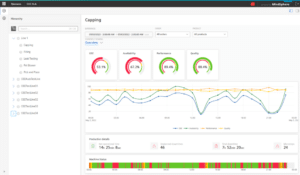
Siemens Insights Hub, formerly MindSphere, is an industrial IoT platform that connects machines and systems to the cloud and applies analytics and AI to manufacturing data. It collects contextualized data from equipment and processes, then turns it into insights for availability, quality, performance, and sustainability. The platform offers a suite of dedicated applications rather than a single tool, including Insights Hub OEE, Asset Health and Maintenance, Quality Prediction, and Energy Manager.
Insights Hub Production Copilot uses production data to help identify issues, find root causes, and guide corrective tasks on the shop floor, and Copilot Studio lets users define their own repeatable skills. The platform is part of the Siemens Xcelerator ecosystem and Industrial Operations X portfolio, and it is built on the Mendix low-code application platform.
Key features include:
- Cloud connectivity for industrial assets: The platform connects machines, assets, and industrial systems to the cloud to collect and manage operational and production data, including connections to Siemens automation equipment.
- Overall equipment effectiveness: Insights Hub OEE measures availability, performance, and quality of production lines and assets, with the ability to trace root causes within operations.
- AI-driven analytics and prediction: Machine learning predicts defects through Quality Prediction and detects inefficiencies across availability, performance, and quality.
- Asset health and maintenance: Insights Hub Asset Health and Maintenance uses equipment and process data to support predictive, preventive, or reactive maintenance strategies based on asset criticality.
- Energy and resource optimization: Energy Manager and Energy Optimizer give visibility into energy use and scope 1 and 2 emissions, using machine learning to detect consumption issues and guide equipment scheduling.
- Production Copilot and low-code development: Production Copilot guides issue identification and corrective actions from production data, while the basis on Mendix supports building custom applications.
Limitations (as reported by users on G2):
- Learning curve: Many users describe a steep learning curve and an interface that can feel complex for newcomers, especially those without IoT or cloud background.
- Pricing and licensing complexity: Users report that the pricing and license model can be confusing and benefits from prior experience with the platform.
- Customization limits: Some users want more flexibility in reports and dashboards, noting that customization options can fall short of specific needs.
- Occasional performance issues: A few users mention slower response or instability when handling large data volumes or complex dashboards.
6. ThingsBoard

Best for: Open-source IoT device management, dashboards, and rules
Strengths: Self-hosted deployment with customizable dashboards
Things to consider: Self-hosting needs infrastructure and operational effort
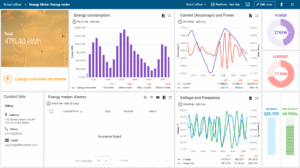
ThingsBoard is an open-source IoT platform for device management, data collection, processing, and visualization. It connects devices using MQTT, CoAP, and HTTP, and supports both cloud and on-premises deployments. The platform stores telemetry data in a scalable, fault-tolerant way and uses configurable rule chains to process and route incoming data. Users build dashboards from a library of more than 600 widgets to monitor data and control devices in real time.
ThingsBoard is available as a free Community Edition, a Professional Edition, and a managed cloud service, with a microservices architecture for scaling. Its ecosystem includes ThingsBoard Edge for edge computing, an IoT Gateway for legacy protocols, a scalable MQTT broker, and Trendz Analytics for data analysis and prediction.
Key features include:
- Multi-protocol device connectivity: ThingsBoard connects devices over MQTT, CoAP, and HTTP, with options to extend or customize transport protocols and an IoT Gateway for legacy systems.
- Telemetry collection and storage: It collects and stores device telemetry in a scalable and fault-tolerant way, with provisioning and management of devices, assets, and their relationships through server-side APIs.
- Rule engine for data processing: Configurable rule chains transform and normalize device data, raise alarms on telemetry events or device inactivity, and route data to external systems.
- Dashboards and visualization: More than 600 customizable widgets and dashboards provide real-time data visualization and remote device control, which can be shared with end users.
- SCADA and industrial control: The platform includes SCADA capabilities with symbols and control widgets for monitoring and controlling industrial processes in real time.
- Deployment options and ecosystem: It offers Community, Professional, and Cloud editions with a microservices architecture, plus ThingsBoard Edge, an MQTT broker, and Trendz Analytics components.
Limitations (as reported by users on G2):
- Self-hosting overhead: Users note that running ThingsBoard in production means managing infrastructure, upgrades, backups, and scaling, which requires operational expertise for high-availability deployments.
- Premium and reporting limits: Some users mention that certain features sit behind the paid editions and that reporting in the Professional Edition produces dashboard screenshots rather than fully customizable reports.
- Widget and customization effort: A few users find creating new widgets difficult and note limited scripting for custom functionality.
- Rule chain tooling: Some users report that rule chains can only be built through the visual canvas, with no programmatic creation or unit testing.
Conclusion
AIoT brings AI models and connected devices into the same operating loop. Its value depends on getting the right data, processing it in the right place, and turning the result into action fast enough to matter. The strongest AIoT solutions combine sensors, processing, and reliable connectivity so teams can move from raw telemetry to useful decisions