


PAGE CONTENTS
IoT for Supply Chain: Top 5 Uses, Components & Best Practices

PAGE CONTENTS
What is IoT for Supply Chain?
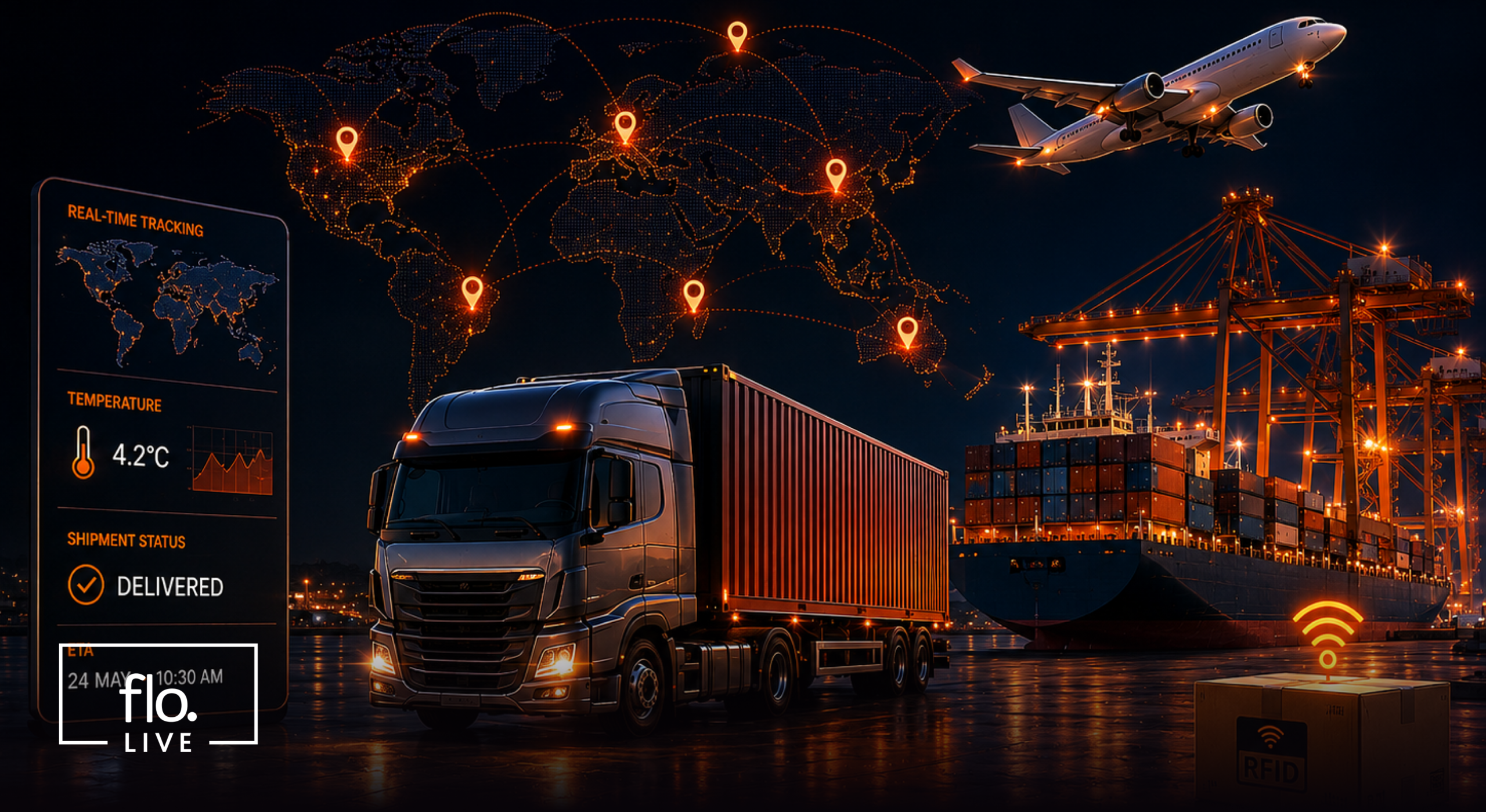
IoT in supply chain management uses sensors, RFID tags, and connected tracking devices to improve visibility from production through delivery. It can support automated inventory management, cold chain monitoring, and predictive maintenance, helping organizations reduce disruptions and improve operational efficiency .
By embedding IoT technology into vehicles, containers, warehouses, and even products themselves, organizations gain real-time data and insights that enable proactive decision-making. This digital transformation helps bridge information gaps between suppliers, manufacturers, logistics providers, and retailers.
Key IoT applications in supply chain:
- Real-time asset tracking: GPS and Bluetooth-enabled devices help teams monitor shipment progress, improve estimated arrival visibility, and identify delays or route deviations.
- Inventory management: RFID tags and sensors reduce manual checks, automating inventory levels and reducing stockouts.
- Warehouse automation: Connected systems optimize space utilization and enhance efficiency.
- Condition monitoring (cold chain): Sensors track temperature, humidity, and vibration, ensuring quality control for sensitive goods.
- Predictive maintenance: IoT sensors monitor vehicle and equipment health to prevent failures, reducing downtime and repair costs.
This is part of a series of articles about IoT applications.
Benefits of IoT for Supply Chain Management
IoT improves supply chain performance by turning physical operations into measurable, data-driven processes. Sensors and connected devices collect data from vehicles, warehouses, and shipments. This information helps companies detect issues early, automate workflows, and improve coordination across supply chain partners.
Key benefits include:
- Real-time visibility: IoT devices track shipments, vehicles, and inventory in real time.
- Improved inventory management: Connected sensors automatically update stock levels in warehouses and stores.
- Better asset tracking: IoT enables continuous monitoring of containers, pallets, vehicles, and equipment.
- Enhanced product condition monitoring: Sensors monitor temperature, humidity, and vibration during transport.
- Faster issue detection: IoT systems alert managers when delays, route deviations, or environmental risks occur.
- Operational efficiency: Automated data collection reduces manual checks and paperwork.
- Data-driven decision making: IoT generates operational data for route optimization and demand forecasting.
Stronger supply chain transparency: Shared IoT data gives partners access to the same operational insights.
Key IoT Applications in Supply Chain
1. Real-Time Asset Tracking
Real-time asset tracking uses IoT devices such as GPS trackers and RFID tags to monitor the location and status of goods, vehicles, and containers throughout the supply chain. This visibility allows companies to track shipments, confirm deliveries, and prevent theft or loss. With accurate data, organizations can optimize routes, reduce delays, and provide customers with reliable delivery estimates.
IoT-based asset tracking can also include monitoring asset conditions such as temperature, humidity, or shock to ensure sensitive goods are handled properly. This visibility can help organizations document handling conditions for regulated products, but compliance still depends on the relevant process controls, operating procedures, and regulatory requirements. Companies can use real-time data to address issues during transit.
2. Inventory Management
IoT automates stock monitoring and replenishment processes. Sensors placed on shelves, pallets, or storage bins collect data on inventory levels, movement, and consumption rates. This helps organizations maintain appropriate stock levels and avoid stockouts. Automated alerts can trigger restocking actions or flag discrepancies.
IoT-driven inventory management also provides insights into product demand and turnover rates. This data supports forecasting and planning, improving order accuracy and reducing carrying costs. With real-time inventory visibility, companies can respond to changes in demand or disruptions.
3. Warehouse Automation
Warehouse automation uses IoT devices such as autonomous mobile robots, automated guided vehicles, and smart conveyor systems to improve efficiency and accuracy in storage and fulfillment operations. These systems move goods, manage inventory, and execute picking and packing tasks with minimal human intervention. Warehouses can often process more orders, reduce manual errors, and improve labor utilization.
IoT-enabled automation also improves safety by monitoring equipment use, tracking worker locations, and identifying potential hazards. Data from sensors and devices can be analyzed to optimize warehouse layouts and predict maintenance needs. This approach helps avoid downtime and supports continuous operations.
4. Condition Monitoring (Cold Chain)
Condition monitoring is critical in cold chain logistics, where maintaining specific temperature and humidity levels is required for perishable goods. IoT sensors placed in containers, trucks, or storage facilities track environmental conditions and send alerts if parameters fall outside safe ranges. This helps protect products such as pharmaceuticals, food, and chemicals during transit and storage.
Data from condition monitoring sensors can provide a record of storage and transport conditions that may support audits, quality controls, and compliance documentation. Automated monitoring reduces manual checks and lowers the risk of human error. Organizations can detect and address issues before spoilage occurs.
5. Predictive Maintenance
Predictive maintenance uses IoT sensors to monitor the health and performance of equipment such as conveyor belts, forklifts, and delivery trucks. These sensors collect data on vibration, temperature, and usage patterns to predict potential failures. Companies can schedule maintenance at planned times, reducing unplanned downtime and repair costs.
By shifting from reactive to predictive maintenance, organizations can extend asset lifespan and improve operational reliability. IoT-enabled predictive maintenance reduces the risk of supply chain disruptions caused by equipment breakdowns.
Components of an IoT Supply Chain
IoT Sensors
IoT sensors collect data on physical conditions such as temperature, humidity, light, vibration, and motion. These sensors are embedded in products, vehicles, or infrastructure to enable automated monitoring and reporting. The data supports asset tracking, environmental monitoring, and equipment health management.
IoT sensors support use cases such as monitoring perishable goods in transit and detecting unauthorized access in warehouses. Organizations can use sensor data to trigger alerts and maintenance actions.
RFID Tags
RFID (radio frequency identification) tags use radio waves to transmit identification data. They are used for tracking goods, pallets, and containers throughout the supply chain. Unlike barcodes, RFID tags do not require line-of-sight scanning and can be read in bulk.
RFID improves asset visibility, reduces scanning errors, and speeds up processing in warehouses and distribution centers. RFID tags also support anti-theft measures and product authentication.
GPS Trackers
GPS trackers use satellite signals to provide real-time location data for vehicles, shipments, and assets. These trackers support route optimization and help reduce transit times. GPS data also enables rerouting in response to traffic conditions, weather events, or disruptions.
GPS trackers can integrate with other sensors to provide additional data such as speed or temperature. This information helps organizations monitor compliance and delivery performance.
Cloud and Edge Computing
Cloud computing provides infrastructure for storing, processing, and analyzing IoT-generated data. Supply chain organizations use cloud platforms to centralize data, enable remote access, and integrate analytics and machine learning tools. Cloud platforms support scaling as data volumes grow.
Edge computing complements cloud infrastructure by processing data closer to its source, at the edge of the network. By analyzing and filtering data locally, edge devices reduce latency and bandwidth use and enable real-time decision-making. This is useful for time-sensitive tasks such as equipment monitoring or automated quality control.
Data Analytics Platforms
Data analytics platforms turn raw IoT data into insights. These platforms aggregate and analyze data collected from sensors, RFID tags, GPS trackers, and other devices. Analytics and visualization tools help supply chain teams identify patterns, forecast demand, and optimize operations.
Analytics platforms can automate reporting, set predictive alerts, and integrate with enterprise resource planning (ERP) and supply chain management (SCM) systems. This supports end-to-end visibility and process automation.
Challenges of Implementing IoT in Supply Chains
Data Security and Privacy
Data security and privacy are major concerns when deploying IoT in supply chains. Connected devices generate and transmit sensitive information about assets, shipments, and operations, making them targets for cyberattacks. Breaches can lead to data theft and business disruption. Protecting IoT data requires encryption, secure device authentication, and continuous monitoring for vulnerabilities.
Organizations must also comply with data protection laws in different jurisdictions. Failure to safeguard information can result in fines and reputational damage. Supply chain leaders should implement security policies, audits, and employee training.
Integration With Legacy Systems
Many supply chain organizations rely on legacy systems that were not built for modern IoT technologies. Integrating IoT devices with older ERP, warehouse management, or logistics systems can require custom interfaces, middleware, or system upgrades.
Lack of interoperability can lead to data silos and inconsistent reporting. Ensuring IoT data flows into existing workflows requires planning and standardized protocols.
High Implementation Costs
Deploying IoT in supply chains can involve upfront costs, including hardware, network infrastructure, software development, and system integration. Additional expenses may include hiring skilled personnel and ongoing support.
Return on investment may not be immediate. Organizations should assess cost-benefit scenarios and focus on high-impact use cases to justify IoT initiatives. Long-term savings from efficiency gains and waste reduction can offset initial costs with a clear implementation strategy.
Device Connectivity and Maintenance
Ensuring reliable connectivity across a distributed supply chain is a challenge. IoT devices may operate in remote areas with limited network coverage or face signal interference. Inconsistent connectivity can lead to data loss or delayed alerts.
IoT devices also require maintenance, including battery replacement, firmware updates, and hardware repairs. Organizations must plan for monitoring and upgrades to maintain performance and data quality.
Best Practices for Deploying IoT Across Supply Chain Networks
Use Scalable Global Connectivity Infrastructure
Organizations need connectivity infrastructure that can scale with geographic and operational growth. This includes cellular, satellite, Wi-Fi, or LPWAN (low-power wide-area network) technologies to maintain communication between devices in different regions.
The right connectivity option depends on the use case. Cellular or satellite may be required for cross-border tracking, while LPWAN may suit low-power warehouse sensors. Enterprises should implement network redundancy and edge gateways to maintain uptime and data integrity.
Build End-to-End Supply Chain Visibility
Full visibility requires integrating IoT across every stage of the supply chain, from raw material sourcing to last-mile delivery. This includes placing sensors and tracking devices in factories, storage facilities, vehicles, and retail outlets.
End-to-end visibility enables monitoring of inventory, asset location, environmental conditions, and process performance. Sharing this data improves coordination. Visibility solutions should include dashboards, standardized data formats, and role-based access controls.
Ensure Interoperability Across Systems
IoT deployments must work with enterprise systems such as ERP, WMS, TMS, and SCM platforms. Organizations should adopt open standards, APIs, and middleware that support data exchange between systems.
Interoperable systems allow real-time IoT data to flow across departments and partners. This also simplifies upgrades and reduces vendor lock-in.
Integrate IoT Data With Analytics and AI
IoT data gains value when analyzed. Companies should feed data from sensors and devices into analytics and AI platforms to support forecasting, anomaly detection, and process optimization.
AI models can predict equipment failures or identify transport inefficiencies. Machine learning can improve demand forecasting by analyzing consumption and external variables. Integrating IoT with analytics platforms supports data-driven decisions.
Prioritize Security and Data Governance
Securing IoT deployments requires a layered security strategy, including device authentication, secure firmware updates, and network segmentation to prevent unauthorized access.
Data governance defines data ownership, storage policies, and access controls. Organizations should establish policies for data retention, compliance, and auditability, especially across multiple jurisdictions. Strong security and governance frameworks support compliance and partner trust.
IoT Connectivity for Supply Chain with Flolive®
Global IoT deployments in supply chains often run into connectivity problems: devices cross borders, networks vary by region, and coverage gaps can interrupt visibility. FLOLIVE® provides globally managed cellular connectivity that can help enterprises keep connected supply chain devices online across distributed operations.
For use cases such as asset tracking, cold chain monitoring, and fleet visibility, Flolive can simplify how organizations provision, manage, and scale connected devices across multiple countries. The practical value is more centralized connectivity management, less operational fragmentation across carriers, and better support for IoT programs that need reliable international reach.