


What Is Smart Transportation?
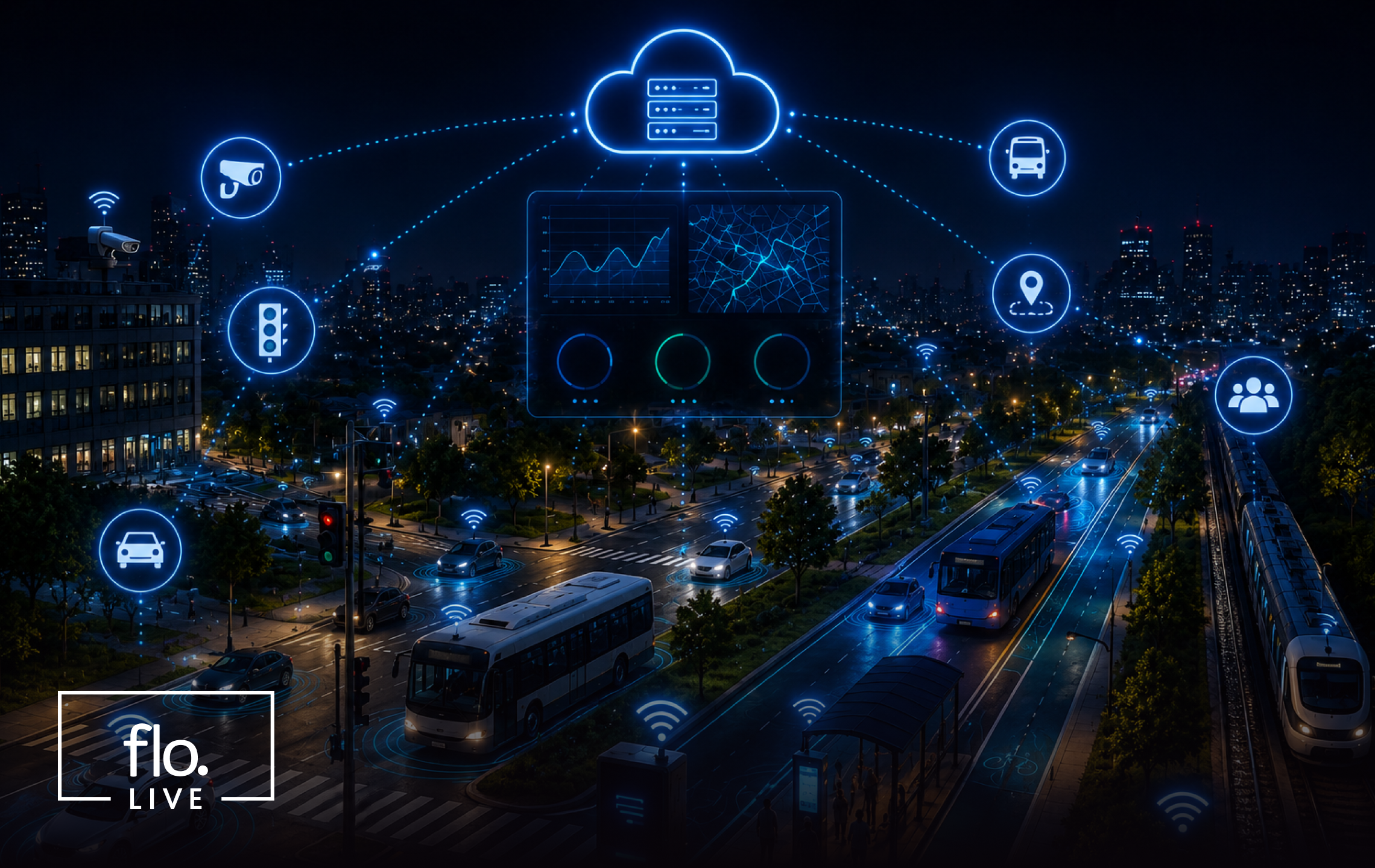
Smart transportation is the integration of IoT sensors, AI, and real-time data into transit networks to improve safety, reduce congestion, and enhance efficiency. It sits within the broader field of smart mobility, which also covers shared transport, travel behavior, and mobility policy. It enables cities and transit operators to automate scheduling, optimize routes dynamically, and offer on-demand microtransit.
Key technologies driving smart transporation:
- IoT sensors and connected devices: Connected vehicles and roadside infrastructure (such as cameras and 3D LiDAR) communicate in real-time to monitor traffic and adjust signals.
- Cellular IoT connectivity: LTE-M, NB-IoT, and 5G networks provide reliable, wide-area connectivity for vehicles, sensors, and transportation infrastructure.
- Edge computing: Data is processed closer to vehicles and roadside systems to enable low-latency decisions and reduce dependence on cloud connectivity.
- AI and predictive analytics: Machine learning algorithms analyze vast amounts of commuter data to predict traffic bottlenecks, manage energy use, and schedule preventive maintenance.
- Mobility as a service (MaaS): Commuters use mobile apps to plan, book, and pay for multimodal journeys seamlessly.
- Digital twins and real-time mapping: Virtual models of transportation networks help operators simulate scenarios, monitor conditions, and optimize traffic flow in real time.
Benefits of Smart Transportation Solutions
Smart transportation systems deliver measurable improvements across mobility, safety, operational efficiency, and environmental performance. In Los Angeles, for example, adaptive signal control improved travel time by 13 percent, cut stops by 31 percent, and reduced delay by 21 percent, according to the USDOT ITS Deployment Evaluation program.
By connecting vehicles, infrastructure, and management platforms, organizations and municipalities can make better decisions and respond to changing transportation demands. Key benefits include:
- Reduced traffic congestion: Real-time traffic monitoring and adaptive signal control help optimize traffic flow, reduce bottlenecks, and shorten travel times.
- Improved road safety: Connected sensors, intelligent traffic management systems, and vehicle-to-infrastructure communication help identify hazards, reduce accidents, and improve emergency response times.
- Enhanced public transit efficiency: Smart scheduling, route optimization, and real-time passenger information improve service reliability and increase public transit use.
- Lower environmental impact: Better traffic management and optimized transportation networks reduce fuel consumption, greenhouse gas emissions, and air pollution.
- Improved user experience: Travelers gain access to real-time updates, route recommendations, parking availability, and multimodal travel options through connected applications.
- More efficient freight operations: Logistics providers use real-time tracking and analytics to optimize routes, reduce delivery delays, and improve supply chain visibility.
- Better infrastructure utilization: Data-driven insights help transportation agencies make better use of existing infrastructure and prioritize maintenance based on actual conditions.
- Cost savings: Reduced congestion, lower fuel use, fewer accidents, and more efficient operations decrease transportation costs for operators and users.
- Support for future mobility: Smart transportation creates the foundation for connected vehicles, autonomous transportation systems, and other mobility technologies.
- Stronger urban planning: Transportation data helps cities make informed decisions about infrastructure investments, transit expansion, and long-term mobility strategies.
Key Technologies Driving Smart Transit
1. IoT Sensors and Connected Devices
IoT sensors enable the continuous monitoring of vehicles, infrastructure, and environmental conditions. These sensors capture data such as vehicle speed, engine performance, road surface quality, and air quality. When deployed across fleets, traffic lights, or public transit systems, they provide a detailed view of real-time conditions that inform operational decisions and improve safety.
Connected devices extend beyond vehicles and roadways. Passenger smartphones, wearable technology, and smart streetlights contribute data to the broader ecosystem. This interconnected network of devices supports services such as dynamic route planning, asset tracking, and predictive maintenance. The result is a transportation network that adapts to disruptions, provides timely information to users, and uses resources more efficiently.
2. Cellular IoT Connectivity
Cellular IoT connectivity supports large-scale smart transportation deployments. Unlike traditional Wi-Fi or short-range protocols, cellular networks offer wide-area coverage for moving assets such as buses, trucks, and trains. Technologies such as LTE-M and NB-IoT provide reliable, low-power connections for sensors and devices across large geographies, ensuring continuous data flow.
With 5G, cellular IoT provides higher bandwidth, lower latency, and greater device density, enabling applications such as real-time video analytics and high-frequency telemetry from dense sensor deployments. These capabilities support services such as emergency response, remote diagnostics, and live traffic management. Cellular IoT keeps vehicles and infrastructure connected to central platforms to support timely decision-making.
3. Edge Computing
Edge computing supports immediate data processing in smart transportation systems. By moving computation closer to the data source, such as within vehicles, traffic cameras, or roadside units, edge computing reduces latency and limits the volume of data sent to centralized servers. This approach supports real-time applications such as collision avoidance, adaptive traffic signals, and onboard diagnostics.
Edge computing also improves system reliability and privacy. Local data processing allows critical functions to continue if cloud connectivity is interrupted. Sensitive information can be filtered or anonymized at the edge before transmission, reducing exposure to cyber threats. As transportation networks become more complex, edge computing supports fast and secure operations.
4. AI and Predictive Analytics
Artificial intelligence and predictive analytics are changing how transportation systems operate. AI algorithms analyze data from sensors, cameras, and connected vehicles to identify patterns, forecast traffic congestion, and optimize routing. These insights support traffic signal control, real-time rerouting of transit vehicles, and proactive maintenance scheduling.
Predictive analytics also supports long-term planning by modeling the impact of new policies, infrastructure changes, or mobility trends. Cities can simulate the effects of introducing bike lanes, congestion charges, or new transit routes before implementation. For operators, AI-driven analytics help reduce costs by anticipating equipment failures and optimizing fuel use. Together, AI and predictive analytics support more adaptive transportation systems.
5. Mobility as a Service (MaaS)
Mobility as a service integrates public transit, ride-hailing, bike sharing, and other options into a single digital platform. Users can plan, book, and pay for multimodal journeys through one app. MaaS platforms use real-time data and predictive analytics to suggest routes based on congestion, weather, and service disruptions.
For cities and operators, MaaS encourages public transit use and reduces traffic congestion. By offering flexible, on-demand transportation options, MaaS can reduce reliance on private vehicles and support more sustainable travel behavior. The integration of payment, scheduling, and real-time information makes MaaS central to user-focused smart transportation strategies.
6. Digital Twins and Real-Time Mapping
Digital twins are virtual representations of physical transportation systems built using real-time data from sensors, cameras, and connected vehicles. These models allow operators to visualize conditions, simulate scenarios, and test changes before deploying them. Digital twins support proactive maintenance, traffic management, and infrastructure planning.
Real-time mapping, powered by digital twins and geospatial data, improves navigation and situational awareness for drivers, passengers, and operators. Up-to-date maps show traffic flows, incidents, and available routes. Together, digital twins and real-time mapping provide a dynamic view of transportation networks that supports faster decision-making.
Key Smart Transportation Use Cases
Connected Fleet Management
Connected fleet management uses telematics and real-time data to track and improve vehicle operations. Fleet operators monitor vehicle location, fuel consumption, driver behavior, and maintenance needs from a centralized dashboard. This visibility supports proactive scheduling, route optimization, and rapid response to incidents, reducing downtime and operational costs.
Sensors and connectivity also support compliance with regulatory requirements such as electronic logging of driver hours and emissions reporting. By analyzing historical and real-time data, fleet managers can identify inefficiencies, plan preventive maintenance, and improve safety.
Example:
A logistics company uses connected fleet management software to monitor delivery trucks in real time, automatically rerouting vehicles around traffic congestion and scheduling maintenance when engine sensors detect early signs of wear.
Logistics and Asset Tracking
Smart transportation technologies improve logistics and asset tracking by providing real-time visibility into the movement of goods. IoT-enabled sensors attached to shipments, pallets, or containers relay information on location, temperature, humidity, and shock events. This data allows logistics providers to monitor asset condition and security throughout the supply chain.
Advanced tracking systems integrate with warehouse and inventory management platforms, enabling automated updates and reducing manual errors. Predictive analytics can forecast delivery times, identify bottlenecks, and optimize routes based on current traffic conditions.
Example:
A pharmaceutical distributor attaches IoT sensors to refrigerated shipments, allowing operators to track location and temperature throughout transit and receive alerts if storage conditions exceed safe limits.
Electric Vehicle Infrastructure
Electric vehicle infrastructure supports the shift to cleaner mobility. Smart charging stations with IoT connectivity monitor energy use, provide real-time availability updates, and enable dynamic pricing. These features help balance grid demand and improve charging access.
Integration with navigation apps and fleet management systems allows drivers to locate available charging stations and plan routes. Utilities and cities use real-time data from charging networks to optimize energy distribution and plan future capacity.
Example:
An EV driver uses a mobile app to locate the nearest available charging station, reserve a charging slot, and receive real-time updates on charging status and estimated completion time.
Smart Traffic Management
Smart traffic management systems use sensors, cameras, and connectivity to monitor and control traffic flows in real time. Adaptive traffic signals adjust light timing based on demand, reducing congestion and improving travel times. Centralized platforms aggregate data from multiple sources, allowing operators to detect incidents, manage road closures, and coordinate emergency response.
These systems provide real-time information to drivers through dynamic signage and mobile apps. Predictive analytics can forecast congestion and suggest alternative routes before problems arise.
Example:
A city deploys adaptive traffic signals that use sensor and camera data to adjust light timings during rush hour, reducing congestion and shortening commute times on major intersections.
The Connectivity Challenges Behind Smart Transportation Systems
Cross-Border Coverage
For transportation systems that operate across national boundaries, maintaining connectivity is a challenge. Vehicles and assets move between regions with different cellular networks, frequency bands, and coverage quality. Ensuring uninterrupted data transmission requires multi-network support and agreements with international carriers. Coverage issues can disrupt real-time tracking, remote diagnostics, and critical communications, especially for international logistics and public transit services.
How to address:
Operators need connectivity that switches between networks automatically and behaves consistently across borders. Multi-network access with local profiles removes the dependency on any single carrier’s roaming agreements, so tracking, diagnostics, and critical messaging continue as assets cross frontiers.
Permanent Roaming Restrictions
Many smart transportation deployments rely on cellular connectivity across large regions. However, some countries and mobile operators impose permanent roaming restrictions that limit how long a device can operate on a foreign network. If a connected device exceeds these limits, it may be disconnected or experience reduced service. These restrictions affect fleet operators, logistics providers, and transportation agencies managing assets across multiple markets.
How to address:
Maintaining compliance often requires SIM management strategies, local network agreements, or global connectivity providers that offer localized network access.
Latency and Performance
Many smart transportation applications depend on rapid data exchange between vehicles, infrastructure, and centralized platforms. Functions such as adaptive traffic control, vehicle-to-infrastructure communication, remote monitoring, and emergency response require low-latency connectivity. Delays in data transmission can reduce system responsiveness. Network performance varies based on location, network congestion, and connectivity type.
How to address:
Transportation operators must account for coverage gaps, bandwidth limits, and changing network conditions as vehicles move through different environments. Combining 5G, edge computing, and network management helps reduce latency and improve reliability.
Security and Data Control
Smart transportation systems generate and transmit large volumes of operational and user data, making security critical. Connected vehicles, roadside infrastructure, mobile applications, and cloud platforms represent potential attack surfaces. Cybersecurity threats such as unauthorized access, data breaches, ransomware, and device tampering can disrupt operations and compromise safety.
How to address:
Organizations should implement device authentication, encrypted communications, secure network access, and continuous monitoring for suspicious activity. Data governance is also important, especially when transportation data crosses jurisdictions with different privacy and compliance requirements.
Best Practices for Smart Transportation Deployments
There are several ways to improve smart transportation initiatives.
1. Build in Network Resilience
Reliable connectivity is essential for smart transportation systems, but network disruptions are inevitable. Vehicles move through areas with varying coverage quality, infrastructure can experience outages, and cellular networks may become congested during peak periods. Designing for resilience helps ensure that critical services continue operating when connectivity changes. Organizations can use multiple network options, redundant communication paths, and automatic failover capabilities. Edge computing allows critical functions to continue locally when cloud connectivity is unavailable.
Key actions:
- Deploy multi-network connectivity with automatic failover.
- Use edge computing to maintain critical operations during outages.
- Monitor network performance and connectivity health in real time.
2. Prioritize Security from the Beginning
Security should be incorporated into smart transportation projects from the earliest planning stages rather than added after deployment. Connected vehicles, sensors, applications, and cloud platforms introduce vulnerabilities if not properly secured. Best practices include strong device authentication, encrypting data in transit and at rest, and maintaining regular software and firmware updates. Organizations should also establish clear access controls and monitoring processes to detect unusual activity.
Key actions:
- Implement strong device authentication and access controls.
- Encrypt data in transit and at rest across all systems.
- Maintain regular firmware updates and vulnerability management.
3. Centralize Connectivity Management
Large transportation deployments often involve thousands of connected devices across different regions and vehicle types. Managing connectivity individually can become complex. Centralized connectivity management provides a unified view of device status, network performance, usage patterns, and operational alerts. A centralized platform allows organizations to provision devices, monitor connectivity, troubleshoot issues, and manage network policies from a single interface.
Key actions:
- Use a single platform to monitor devices and network status.
- Automate device provisioning and connectivity policy management.
- Configure alerts for outages, anomalies, and usage thresholds.
4. Plan for Local Compliance and Roaming Restrictions
Connectivity regulations vary between countries and regions. Requirements related to data privacy, telecommunications licensing, and permanent roaming restrictions can affect how transportation systems are deployed and managed. Organizations should evaluate regulatory requirements before deployment and select connectivity solutions that support local compliance. This may involve using localized network profiles, working with regional carriers, or implementing data residency controls.
Key actions:
- Review telecommunications and data privacy requirements before deployment.
- Use local network profiles where permanent roaming restrictions apply.
- Implement data residency controls when required by regulations.
5. Use eSIM or iSIM for Long-Term Flexibility
Transportation assets often remain in service for many years, making long-term connectivity flexibility important. Traditional SIM cards can limit network options and require physical replacement when connectivity needs change. eSIM and iSIM technologies allow network profiles to be updated remotely. This flexibility allows organizations to switch carriers, add local connectivity options, and respond to regulatory requirements without replacing hardware.
Key actions:
- Enable remote carrier switching without replacing hardware.
- Maintain access to local network options in different regions.
- Future-proof deployments against regulatory and connectivity changes.
6. Test Coverage in Real Operating Conditions
Network performance can vary between laboratory testing and real-world operation. Terrain, building density, weather conditions, vehicle speed, and network congestion affect connectivity quality. Testing in actual operating environments provides a clearer understanding of system performance. Organizations should evaluate coverage across the full range of routes, locations, and conditions where assets operate. Testing should include normal and challenging scenarios to identify potential gaps before large-scale deployment.
Key actions:
- Conduct field testing across all planned routes and service areas.
- Validate performance during peak traffic and adverse weather conditions.
- Identify and address coverage gaps before large-scale rollout.
Powering Smart Transportation with FLOLIVEⓇ Global IoT Connectivity
Smart transportation only works when every vehicle, sensor, and roadside device stays continuously connected and compliant, no matter where it travels. That is the exact problem FLOLIVEⓇ solves. Its cloud-managed, localized global network applies local profiles and enables local breakout across continents, giving transportation operators global reach with local performance.
With 15+ carrier partners and 750+ networks unified under a single platform, Flolive keeps connected fleets, transit systems, and mobility assets online with the low latency, real-time visibility, and regulatory compliance that mission-critical transportation applications demand.
Key capabilities of Flolive Global IoT Connectivity:
- Localized global coverage: A cloud-managed network applies local profiles and local breakout across continents, so devices connect to a local core in their region for consistent behavior, low latency, and compliance everywhere they operate.
- Any cellular technology from 2G to 5G and NTN: Flolive controls its full technology stack and combines cellular, LPWA, and satellite Non-terrestrial Networks (IoT NTN) under one platform, with satellites able to act as a backup for uninterrupted coverage.
- Support for any SIM type: The platform supports plastic SIMs, embedded MFF2 eSIMs, iSIM architectures, and softSIM, with seamless activation, smart switching, and full lifecycle control across all devices and geographies.
- Permanent roaming compliance: A multi-IMSI platform can apply native local profiles when devices enter restricted markets, delivering “Permanent Roaming Safe” connectivity and keeping fleets legally compliant without manual intervention.
- Data privacy and sovereignty compliance: Localized connectivity keeps data traffic within national borders, helping operators meet GDPR, CCPA, and other data privacy regulations that roaming-based solutions cannot satisfy.
- Unified Connectivity Management Platform (CMP): A single-pane-of-glass dashboard provides real-time visibility to monitor usage, manage security policies, and switch network profiles across every device and carrier from one interface.
- Low latency and high throughput: Localized core networks and regional breakouts route data along the shortest path, reducing latency and improving uptime for real-time applications such as autonomous vehicles and live monitoring.
Learn more about how Flolive keeps connected transportation online, compliant, and performant everywhere: Flolive Global IoT Connectivity.